Custom software development guide 2026: optimize business

Many businesses struggle when off-the-shelf software fails to match their unique workflows and customer needs. Generic solutions often create bottlenecks, limit scalability, and force teams to work around rigid features instead of with them. Custom software development offers a powerful alternative by building tailored solutions that align perfectly with your specific business processes and growth objectives. This guide walks you through understanding when custom software makes sense, preparing your project for success, navigating the development process, and ensuring quality outcomes that drive measurable business value.
Table of Contents
- Understanding The Need For Custom Software Development
- Preparing For A Successful Custom Software Project
- The Custom Software Development Process Explained
- Ensuring Quality And Measuring Success In Custom Software
- Explore Expert Custom Software Development Services
Key takeaways
| Point | Details |
|---|---|
| Tailored solutions | Custom software aligns precisely with your business goals and operational workflows. |
| Preparation matters | Thorough requirements gathering and clear objectives prevent costly errors and delays. |
| Structured process | Following proven development phases reduces risks and ensures predictable outcomes. |
| Partner selection | Choosing experienced developers with strong communication skills determines project success. |
| Quality verification | Continuous testing and performance tracking validate that software meets business needs. |
Understanding the need for custom software development
Off-the-shelf software packages promise quick deployment and familiar interfaces, but they rarely fit the nuanced requirements of growing businesses. Generic platforms force you to adapt your processes to their limitations rather than the other way around. You encounter integration headaches when trying to connect different systems, face rigid workflows that slow down teams, and struggle with features you pay for but never use alongside missing capabilities you desperately need.
Custom software solutions can boost operational efficiency by 74% according to recent market studies. This dramatic improvement stems from eliminating unnecessary steps, automating repetitive tasks, and creating seamless data flow between departments. When software mirrors your actual business logic, employees spend less time fighting the system and more time delivering value to customers.
Custom development delivers several concrete advantages that directly impact your bottom line:
- Complete control over features and functionality based on real user needs
- Seamless integration with existing systems and databases
- Scalability that grows with your business without forced upgrades
- Competitive differentiation through unique capabilities competitors cannot replicate
- Enhanced security tailored to your specific data and compliance requirements
Consider how a logistics company might need real-time route optimization tied to inventory levels, or how a healthcare provider requires HIPAA-compliant patient portals with custom workflow approvals. These scenarios demand purpose-built solutions that generic software simply cannot provide. The custom software benefits for business extend beyond immediate efficiency gains to create lasting competitive advantages in your market.
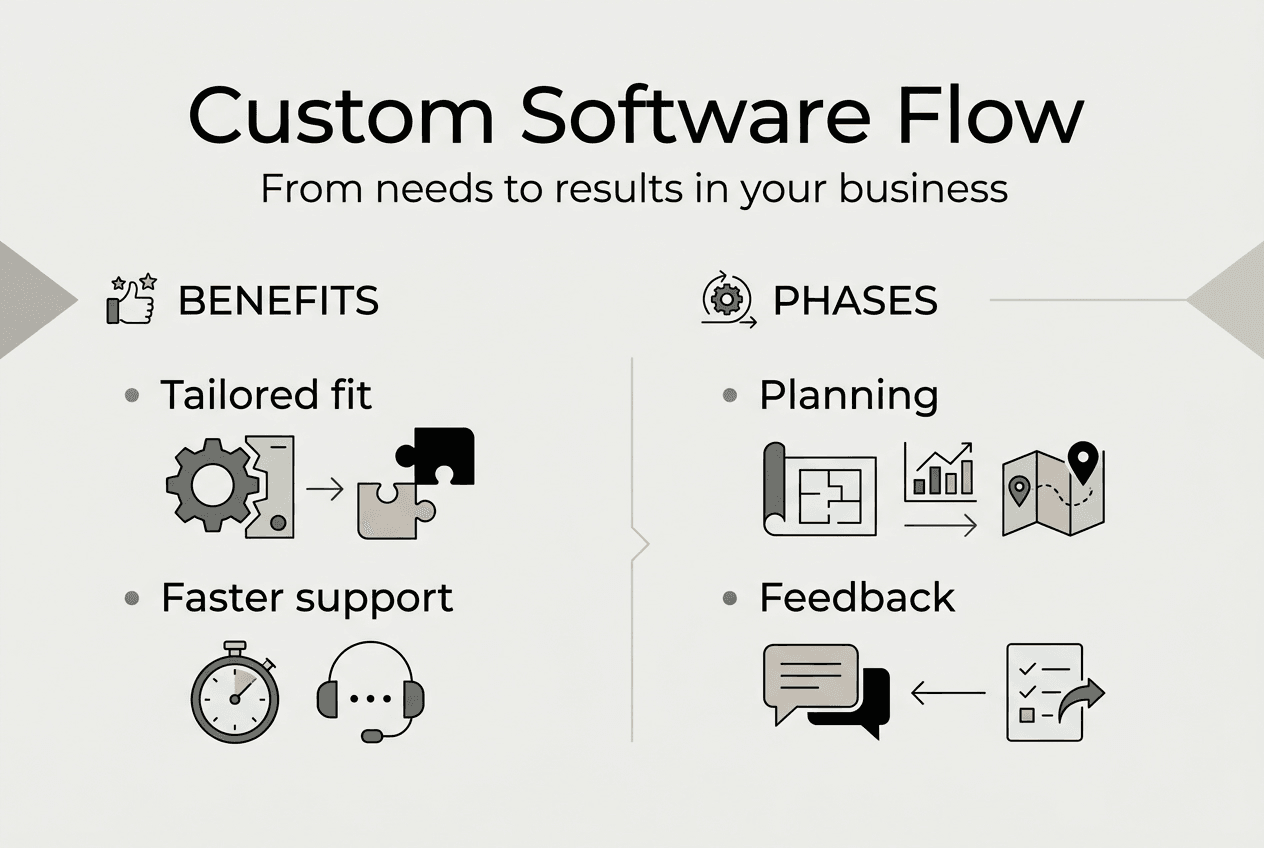
Customer experience improvements represent another critical driver. When your software enables faster response times, personalized interactions, and intuitive self-service options, satisfaction scores climb while support costs drop. Custom applications let you design every touchpoint around customer preferences rather than forcing them into predetermined templates.
Preparing for a successful custom software project
Rushing into development without proper groundwork guarantees expensive revisions and missed deadlines. Successful projects begin with comprehensive requirements gathering that captures input from everyone who will use or be affected by the new system. Schedule interviews with department heads, front-line staff, and key customers to understand pain points, desired outcomes, and workflow realities.
Document these requirements in clear, testable terms. Instead of vague goals like "improve efficiency," specify measurable targets such as "reduce order processing time from 15 minutes to 5 minutes" or "enable customers to track shipments in real time." Effective preparation and clear requirements minimize costly development errors and project delays by ensuring everyone shares the same vision from day one.
Your technology evaluation should balance current needs with future growth. Consider these factors when selecting your stack:
- Programming languages and frameworks with active developer communities
- Cloud infrastructure that scales automatically with demand
- Database systems that handle your data volume and query patterns
- Security protocols that meet industry regulations and customer expectations
- Mobile compatibility if users need access beyond desktop computers
Choosing the right development partner matters as much as the technology itself. Look for teams with proven experience in your industry who can demonstrate completed projects similar to yours. Strong communication skills separate great partners from mediocre ones. You need developers who ask probing questions, explain technical concepts clearly, and provide regular progress updates without jargon.
Pro Tip: Request detailed proposals from at least three potential partners that outline their approach, timeline, team structure, and support terms. Compare not just pricing but their understanding of your business challenges and proposed solutions.
Budget planning requires honest conversations about scope and priorities. Most custom software projects cost between $50,000 and $500,000 depending on complexity, though simpler tools may run less and enterprise systems considerably more. Build in a 20% contingency for unexpected requirements that emerge during development. Timeline expectations typically range from three months for basic applications to 18 months for complex enterprise platforms. The enterprise app development steps you follow directly influence both cost and duration.
The custom software development process explained
Custom software creation follows distinct phases that each serve specific purposes in transforming your vision into working code. Understanding this workflow helps you set realistic expectations and participate effectively as a stakeholder.
The process typically unfolds in these stages:
- Requirements analysis where developers document every feature, integration, and user interaction in detail
- UI/UX design creating wireframes and mockups that visualize the user experience before coding begins
- Development sprints where programmers build functionality in iterative cycles with regular demos
- Quality assurance testing each component individually and as an integrated system
- Deployment moving the finished software to production environments with proper security
- Maintenance providing ongoing updates, bug fixes, and feature enhancements
Agile methodology dominates modern development because it embraces change rather than resisting it. Teams work in two-week sprints, delivering working features you can test and provide feedback on immediately. This iterative approach catches problems early when fixes cost less and ensures the final product matches your evolving needs. Waterfall methodology, where each phase completes before the next begins, still makes sense for projects with absolutely fixed requirements and regulatory constraints.

| Phase | Key Activities | Deliverables |
|---|---|---|
| Requirements | Stakeholder interviews, workflow mapping, technical specifications | Requirements document, user stories |
| Design | Wireframing, prototyping, user testing | UI mockups, design system |
| Development | Coding, integration, version control | Working software modules |
| Testing | Automated tests, manual QA, security audits | Test reports, bug fixes |
| Deployment | Server setup, data migration, user training | Live application, documentation |
| Maintenance | Monitoring, updates, feature additions | Performance reports, patches |
Your development team typically includes a project manager coordinating work and timelines, business analysts translating requirements into technical specs, UI/UX designers crafting the interface, front-end developers building what users see, back-end developers creating server logic and databases, QA engineers testing everything, and DevOps engineers managing infrastructure. Larger projects may add security specialists, data scientists, or industry experts.
Pro Tip: Insist on weekly demos where developers show working features, not just status reports. Seeing actual functionality helps you catch misunderstandings before they become expensive problems.
Continuous feedback loops separate successful projects from troubled ones. When you review working software every two weeks and provide specific input, developers can adjust course immediately. This collaboration ensures the application development process stays aligned with business goals rather than drifting toward technical preferences that miss the mark.
Ensuring quality and measuring success in custom software
Building software represents only half the challenge. Verifying it works correctly under real-world conditions and delivers promised business value requires systematic testing and measurement.
Comprehensive testing happens at multiple levels:
- Unit testing validates individual code functions perform correctly in isolation
- Integration testing confirms different modules work together without conflicts
- User acceptance testing lets actual users verify the software meets their needs
- Performance testing ensures the system handles expected load without slowdowns
- Security testing identifies vulnerabilities before hackers do
User acceptance testing deserves special attention because it represents your last chance to catch issues before launch. Select a diverse group of actual users, not just managers, to spend several days working with the software on realistic tasks. Document every confusion, error, and suggestion they encounter. Regular quality checks and iterative testing help catch issues early and improve software reliability before problems affect customers or operations.
Post-launch monitoring tracks whether the software delivers expected business improvements. Define key performance indicators during the planning phase so you can measure actual results against goals. Relevant KPIs might include transaction processing speed, error rates, user adoption percentages, customer satisfaction scores, or cost savings from automation. Review these metrics monthly and investigate any trends that deviate from targets.
Quality assurance is not a phase but a continuous practice that protects your investment and reputation. Cutting corners on testing creates technical debt that compounds over time, eventually requiring expensive rewrites or causing costly failures.
Continuous improvement cycles keep your software relevant as business needs evolve. Schedule quarterly reviews where users share pain points and suggest enhancements. Prioritize these requests based on impact and effort, then plan regular update releases. This iterative refinement prevents the stagnation that plagues many custom systems when organizations treat them as finished products rather than living tools.
Common verification pitfalls include testing only happy paths while ignoring error scenarios, using developers instead of real users for acceptance testing, skipping performance tests until production, and failing to document test cases for regression testing. Avoid these mistakes by following established QA practices and allocating sufficient time and budget for thorough validation. The innovative tech strategies that separate industry leaders from followers always include robust quality processes.
Explore expert custom software development services
Transforming your business vision into powerful custom software requires experienced partners who understand both technology and your industry challenges. YS Lootah Tech specializes in custom application development tailored for businesses across diverse sectors, from logistics and healthcare to fintech and e-commerce. Their development teams bring deep expertise in modern technologies including AI integration, cloud architecture, and enterprise systems that scale with your growth.
Every successful application starts with intuitive design that users embrace rather than resist. YS Lootah Tech's professional UX/UI design services create interfaces that feel natural and guide users effortlessly through complex workflows. Their designers conduct user research, build interactive prototypes, and test extensively before development begins, ensuring the final product delights rather than frustrates.
Navigating technology choices and project management complexities challenges even experienced IT leaders. IT consulting solutions from YS Lootah Tech provide strategic guidance on architecture decisions, vendor selection, security planning, and implementation roadmaps. Their consultants help you avoid costly mistakes while accelerating time to value.
Pro Tip: Partner with a full-service provider who handles design, development, and ongoing support under one roof. This integrated approach eliminates coordination headaches and ensures everyone works toward unified business objectives.
FAQ
What is the typical timeline for developing custom software?
Development timelines usually range from three months for straightforward applications to over a year for complex enterprise systems with extensive integrations. Project scope, team size, and requirement clarity determine actual duration. Effective planning with detailed requirements and regular stakeholder feedback helps keep projects on schedule and prevents scope creep that extends timelines.
How do I choose the right technology stack for my custom software?
Consider scalability needs, security requirements, and compatibility with your existing systems when evaluating technology options. Modern cloud-based stacks offer flexibility and growth potential most businesses need. Consult with experienced developers and enterprise app development steps experts who can assess your specific situation and recommend proven technologies that match your technical capabilities and budget constraints.
What are common challenges in custom software development and how can I avoid them?
Challenges include unclear or changing requirements, scope creep adding features mid-project, poor communication between stakeholders and developers, and underestimating complexity. Avoid these problems through thorough upfront planning, documented requirements everyone agrees on, regular progress reviews with working demos, and choosing experienced partners with strong project management. Understanding custom software benefits helps maintain focus on business value rather than technical features.
How much does custom software development typically cost?
Costs vary widely based on complexity, features, and team location, typically ranging from $50,000 for basic applications to $500,000 or more for enterprise platforms. Factors affecting price include number of user roles, integration requirements, security needs, and ongoing maintenance expectations. Request detailed proposals that break down costs by phase and feature so you understand exactly what you're paying for and can prioritize accordingly.
What ongoing maintenance does custom software require after launch?
Custom software needs regular security patches, bug fixes, performance optimization, and feature updates to remain effective and secure. Plan for monthly monitoring, quarterly updates, and annual major enhancements as your business evolves. Most development partners offer maintenance contracts covering routine updates and support, typically costing 15 to 20 percent of initial development investment annually. This ongoing investment protects your software asset and ensures it continues delivering business value.
Recommended
- What is custom software: benefits for business 2026
- Custom Software Solutions UAE 2026: 74% Efficiency Boost
- Master enterprise app development steps for UAE in 2026
- Innovative tech strategies for business leaders 2026
- Building Trust in B2B SaaS: 2026 Strategy for Cautious Buyers - Media House Agency