What Is Smart Industry? A Guide for Business Leaders

TL;DR:
- Smart industry integrates IoT, AI, and real-time analytics to create autonomous, self-acting systems. It expands beyond Industry 4.0 by enabling machines to predict, decide, and act independently across various sectors.
Smart industry is defined as the integration of IoT, AI, and real-time analytics into industrial operations to create systems that are autonomous, adaptive, and predictive. The term is often used interchangeably with Industry 4.0, but the distinction matters: Industry 4.0 connects machines, while smart industry makes those machines think and act independently. The Smart Industry Readiness Index (SIRI) provides a globally recognized framework for measuring where a company stands on that journey. With 67% of manufacturers actively investing in industrial digital transformation, the shift from connected to intelligent operations is no longer a future trend. It is the current competitive standard.
What is smart industry and how does it differ from Industry 4.0?
Smart industry is the next evolution beyond Industry 4.0. Where Industry 4.0 focused on connecting machines and systems through digital networks, smart industry adds a layer of intelligence. Systems become autonomous and predictive through AI, meaning they do not just report data. They act on it without human intervention.
The practical difference shows up on the factory floor. A connected machine in an Industry 4.0 setup sends a temperature alert to an operator. A smart industry system detects the same anomaly, cross-references historical failure patterns, and schedules a maintenance window before the machine breaks down. That shift from notification to autonomous action is the core of the smart industry definition.
Smart industry also expands the scope beyond manufacturing. Logistics, energy, healthcare infrastructure, and agriculture all apply the same principles: collect data continuously, analyze it with AI, and let systems respond in real time. The result is an industrial ecosystem that learns and improves over time rather than waiting for human decisions at every step.
What are the key technologies enabling smart industry?
Four technology pillars power smart industrial systems. Each one builds on the others, and removing any one of them weakens the entire architecture.
- Internet of Things (IoT): IoT sensors act as the nervous system of a smart facility. They collect temperature, pressure, vibration, and throughput data continuously from machines, products, and environments.
- Artificial Intelligence and machine learning: AI processes the sensor data at scale. It identifies patterns, predicts failures, and triggers automated responses faster than any human analyst could.
- Industrial analytics and big data: Raw sensor data has no value without analysis. Industrial analytics platforms convert data streams into decisions, from quality control flags to energy consumption adjustments.
- Cyber-physical systems and cloud computing: Cyber-physical systems link the digital and physical worlds in real time. Cloud computing provides the storage and processing power to run analytics across thousands of connected assets simultaneously.
- Robotics and automation: Modern industrial robots do not just repeat fixed tasks. They adapt their behavior based on real-time data inputs, making production lines more flexible and less dependent on manual reprogramming.
Pro Tip: Brownfield integration is the most underestimated challenge in smart industry projects. Legacy equipment often requires specialized gateways and protocol translation layers before it can communicate with modern platforms. Budget for this before you budget for anything else.
Understanding how these technologies work together is easier with context from AI trends for enterprises, which shows how AI and analytics are reshaping industrial decision-making in 2026.
How does the Smart Industry Readiness Index guide industrial transformation?
The Smart Industry Readiness Index, known as SIRI, is a practical assessment framework developed to help manufacturers measure their digital maturity and plan their transformation steps. SIRI defines three core building blocks: Technology, Process, and Organisation. These map across eight key pillars and sixteen maturity assessment dimensions.
SIRI's value is in its structure. Most companies know they need to digitize. Few know where to start or how to prioritize investments. SIRI's Assessment Matrix identifies current capability gaps. The Prioritisation Matrix then ranks which gaps to close first based on business impact and implementation complexity. That combination turns a vague digital ambition into a sequenced action plan.
The SIRI Assessor Programme certifies professionals to conduct these assessments, which adds credibility and consistency to the results. Companies that complete a SIRI assessment receive a maturity score across all sixteen dimensions, giving leadership a clear picture of where they stand relative to smart industry benchmarks.
| SIRI building block | Key pillars covered | What it measures |
|---|---|---|
| Technology | Automation, connectivity, intelligence | Machine and system digital capability |
| Process | Operations, supply chain, product lifecycle | How data flows through production workflows |
| Organisation | Workforce, leadership, culture | Human and structural readiness for change |
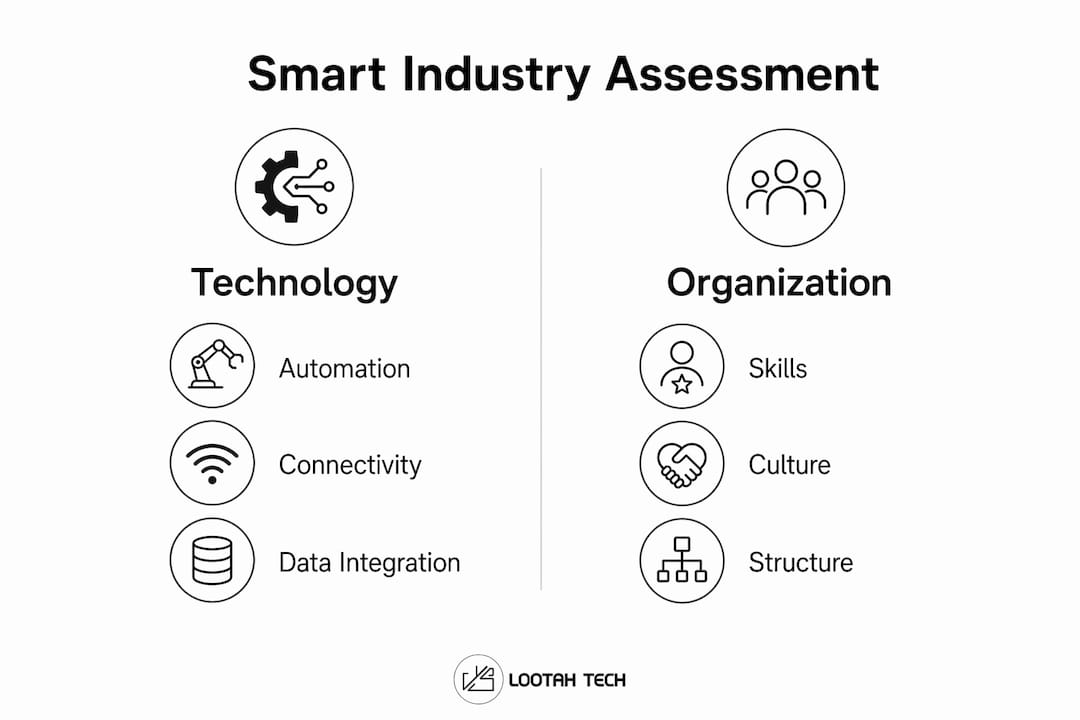
SIRI's maturity bands provide a stepwise growth path from early-stage initiation to advanced autonomous operations. That structure makes it useful for companies of any size, not just large enterprises with dedicated transformation teams.
What are practical examples of smart industry in action?
Smart industry applications appear across sectors, and the most instructive examples are the ones that show measurable outcomes rather than technology for its own sake.
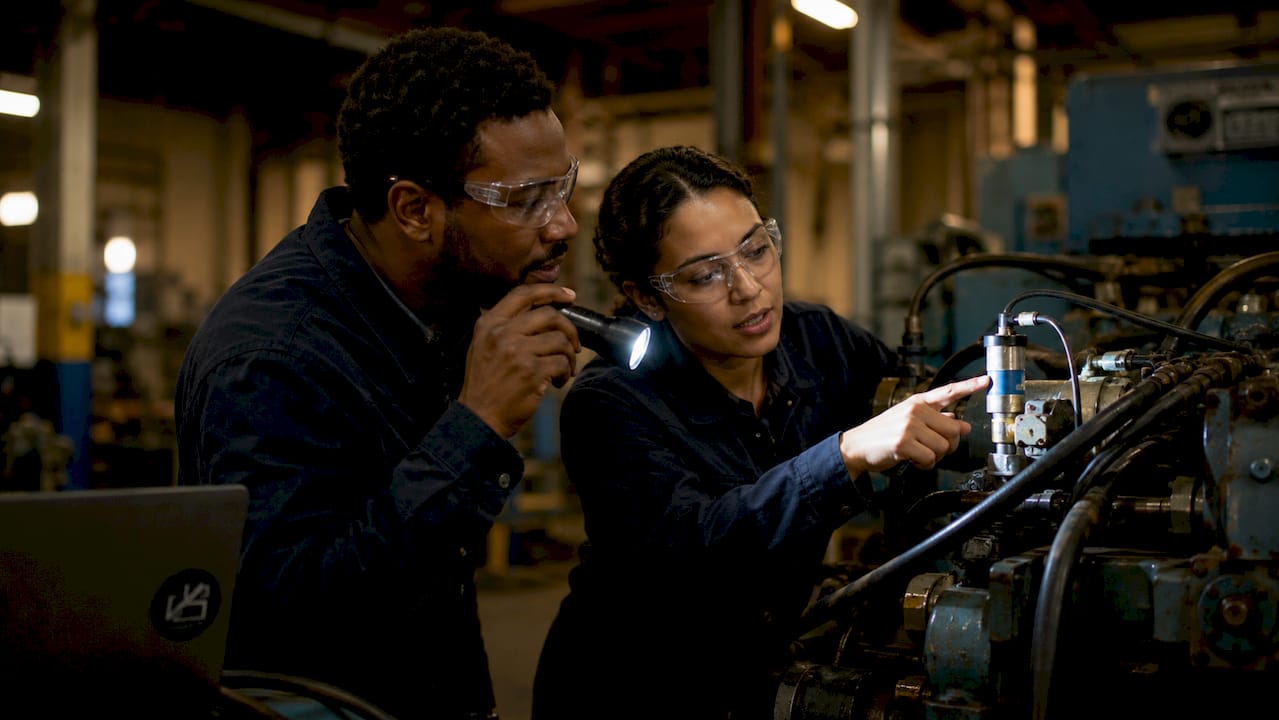
In manufacturing, predictive maintenance is the clearest proof of value. Sensors on production equipment monitor vibration and heat signatures continuously. AI models flag components that are likely to fail within a defined window, allowing maintenance teams to act during planned downtime rather than emergency shutdowns. The result is fewer unplanned stoppages and longer equipment life.
Smart logistics applies the same logic to supply chains. Real-time data from warehouse sensors, GPS-tracked shipments, and demand forecasting models lets operations teams reroute deliveries, adjust inventory levels, and respond to disruptions before they cascade. A delayed shipment from a supplier triggers an automatic reorder from an alternative source without waiting for a procurement manager to notice the gap.
KPMG analysis shows that smart industrial companies are increasingly building smart product business models, where the product itself generates data that the manufacturer sells as a service. A pump manufacturer, for example, no longer just sells pumps. It sells uptime guarantees backed by real-time performance monitoring.
Pro Tip: Avoid islands of automation by centralizing your data strategy before deploying new tools. Disconnected systems that each generate their own data streams create more complexity than they solve. A unified data governance model should come before any new technology purchase.
For a broader view of how smart technology works across sectors, the concept extends well beyond the factory floor into energy, logistics, and public infrastructure.
What benefits does smart industry deliver for businesses?
The benefits of smart industry fall into three categories: operational efficiency, business model expansion, and sustainability. Each one compounds the others when implemented together.
On the operational side, smart manufacturing reduces maintenance costs by up to 25% and increases efficiency by over 30%. Those numbers reflect the shift from reactive to predictive operations. When machines tell you what they need before they fail, you spend less on emergency repairs and more on planned improvements.
Business model expansion is the less obvious benefit. Smart industrial companies adopt product-as-a-service models that generate recurring revenue from data and performance guarantees rather than one-time equipment sales. That shift changes the economics of the business entirely, moving from lumpy capital expenditure cycles to predictable service contracts.
Sustainability gains come from the feedback loops that smart systems create. Smart industry builds situational awareness into operations, where real-time data on energy consumption, waste output, and resource use feeds directly into operational decisions. A facility that knows exactly how much energy each process consumes can cut waste without guessing.
| Dimension | Traditional industry | Smart industry |
|---|---|---|
| Maintenance approach | Reactive, scheduled intervals | Predictive, condition-based |
| Production flexibility | Fixed, slow to change | Adaptive, real-time adjustments |
| Business model | Product sales | Product plus data services |
| Energy management | Manual monitoring | Automated feedback and control |
| Workforce role | Task execution | Data interpretation and oversight |
Key Takeaways
Smart industry delivers measurable competitive advantage when IoT, AI, and unified data governance work together across technology, process, and organizational dimensions.
| Point | Details |
|---|---|
| Smart industry vs. Industry 4.0 | Smart industry adds autonomy and prediction to Industry 4.0 connectivity. |
| SIRI framework | Use the three building blocks and sixteen dimensions to identify gaps and sequence investments. |
| Brownfield integration | Budget for protocol gateways and middleware before any other technology spend. |
| Efficiency and cost gains | Predictive maintenance cuts maintenance costs by up to 25% and raises efficiency by over 30%. |
| Business model shift | Smart industry enables product-as-a-service revenue that replaces or supplements equipment sales. |
Why most smart industry projects stall before they deliver
The technology is rarely the problem. Most smart industry projects that fail do so because of organizational issues, not technical ones. Smart industry adoption requires a workforce that can interpret data and manage automated workflows, and most companies underestimate how much training that demands.
The second failure pattern is the data silo problem. Companies deploy sensors, analytics platforms, and automation tools in separate departments. Each team generates data, but none of it connects. Transforming factories into smart ecosystems requires unified data governance and organizational change, not just new software licenses.
My honest recommendation is to start with a SIRI assessment before spending anything on technology. The assessment forces a structured conversation across technology, process, and organization simultaneously. It surfaces the gaps that matter most and prevents the common mistake of buying tools before understanding the problem they are supposed to solve.
The future of smart industry points toward increasing AI autonomy in decision-making, with human roles shifting toward oversight, exception handling, and continuous improvement. That shift is not a threat to the workforce. It is a skills upgrade requirement. Companies that invest in digital skills training alongside technology will outperform those that treat the human element as an afterthought.
Incremental transformation beats big-bang rollouts every time. Pick one process, instrument it fully, measure the results, and then expand. That approach builds internal capability and organizational confidence in parallel with the technology.
— YS
How Yslootahtech supports your smart industry goals
Industrial digital transformation requires more than a technology vendor. It requires a partner who understands how AI, machine learning, and connected systems work together at the operational level.
Yslootahtech delivers AI and machine learning solutions built for industrial clients who need predictive analytics, autonomous optimization, and real-time decision support. The team works across manufacturing, logistics, and enterprise operations to design systems that fit existing infrastructure rather than replacing it wholesale. Whether you are starting a SIRI assessment or scaling an existing digital program, Yslootahtech provides the technical depth and strategic planning to move from connected to genuinely intelligent operations. Explore digital solutions for growth to see how the right technology choices compound over time.
FAQ
What is the smart industry definition in simple terms?
Smart industry is the use of IoT, AI, and real-time analytics to make industrial systems autonomous and predictive. It goes beyond connecting machines to making those machines act on data without human intervention.
How does smart industry differ from a smart factory?
A smart factory is a single facility that applies smart industry principles. Smart industry is the broader concept that applies across entire supply chains, logistics networks, and business models.
What is the Smart Industry Readiness Index?
SIRI is a globally recognized framework that assesses manufacturing digital maturity across three building blocks: Technology, Process, and Organisation, mapped across sixteen dimensions. It helps companies identify gaps and prioritize transformation investments.
What are the main benefits of smart industry for businesses?
Smart manufacturing reduces maintenance costs by up to 25% and increases efficiency by over 30%. It also enables new revenue models like product-as-a-service and reduces energy waste through real-time operational feedback.
What is the biggest challenge in adopting smart industry?
Brownfield integration is the most common technical barrier. Legacy equipment requires specialized gateways and protocol translation to connect with modern digital platforms, and the cost is frequently underestimated in early project planning.