What Is a Digital Operations Model? A 2026 Guide

TL;DR:
- A digital operations model is a strategic blueprint that aligns people, processes, technology, and governance to execute digital strategy effectively. Its success depends on designing and continuously updating all six core dimensions, including culture and governance, to avoid transformation failures. Leaders should start with an organization assessment, follow a structured sequence, and treat the model as a living framework to sustain digital performance.
A digital operations model is defined as the strategic blueprint that coordinates an organization's people, processes, technology, and governance to deliver value in a digital-first environment. Business leaders and IT managers searching for what is digital operations model often confuse it with digital strategy itself. The two are distinct: strategy sets the direction, while the operating model defines how the organization actually executes it. A well-designed operating model integrates five core choices: digital ownership, reporting structures, organizational models, value delivery processes, and technology utilization. Without this blueprint, even well-funded transformation programs stall before they deliver results.
What is a digital operations model and why does it matter?
A digital operations model, also called a digital operating model, spans business, technology, data, governance, and culture to connect strategy to day-to-day execution. That scope is what makes it different from a project plan or a technology roadmap. It answers the question every executive eventually asks: "We have the strategy. Now how do we actually run the organization to make it real?"

The model matters because execution gaps are the primary reason transformations fail. Only 30% of digital transformation programs successfully meet their intended objectives. That means 70% fall short, and the most common cause is not bad technology. It is the absence of a coherent operating model that aligns leadership, culture, and process around digital goals.
A strong digital operations framework also builds organizational agility. When decision rights are clear and workflows are designed for speed, teams respond to market shifts without waiting for approval chains to resolve. That agility is the real competitive advantage the model delivers.
What are the core components of a digital operations model?
Six interdependent dimensions define a well-structured digital operations model: organization structure, governance, processes, sourcing, technology, and culture. Each dimension shapes how the others function. Weak governance, for example, undermines even the best process design.
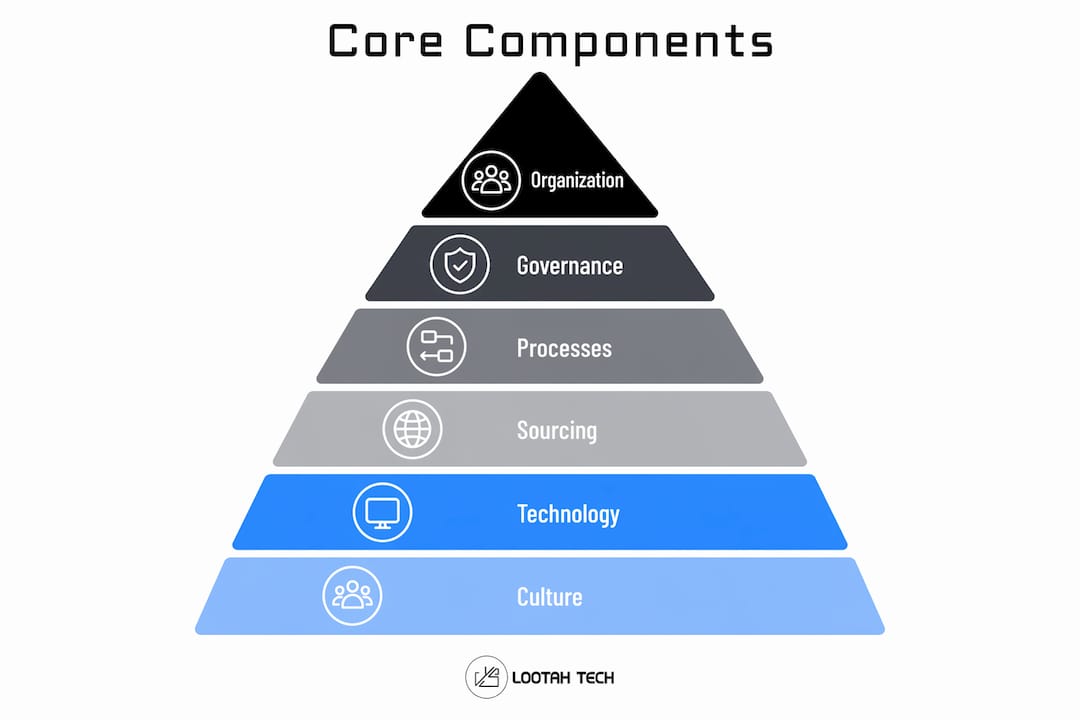
| Dimension | What it defines |
|---|---|
| Organization structure | Reporting lines, team design, and digital ownership |
| Governance | Decision rights, accountability, and investment prioritization |
| Processes | Value delivery workflows and cross-functional coordination |
| Sourcing | Build vs. buy decisions and partner ecosystem management |
| Technology | Platforms, data architecture, and integration standards |
| Culture | Behaviors, mindsets, and change readiness across the workforce |
These six dimensions do not operate in sequence. They interact continuously. A change in sourcing strategy, such as moving to cloud-native platforms, immediately affects technology architecture, team skills, and governance. Leaders who treat these dimensions as separate workstreams create the silos they are trying to eliminate.
Pro Tip: Map your current state across all six dimensions before designing the future state. Organizations that skip this diagnostic step routinely design models that look good on paper but conflict with how work actually gets done.
Why does a digital operations model determine transformation success?
The primary barrier to successful transformation is not technology. It is organizational culture, skills, and leadership alignment. That finding reframes the entire conversation for IT managers who default to platform selection as the first step.
"A digital operating model must break down traditional departmental silos to ensure digital tools are integrated into daily activities. Without structural change, technology investments produce isolated pockets of efficiency rather than organization-wide capability."
Fewer than 40% of organizations conduct structured readiness assessments before launching digital transformation programs. That gap explains a significant portion of the 70% failure rate. You cannot design a fit-for-purpose operating model without first understanding where your organization's capabilities, culture, and governance currently stand.
A clear digital operations framework mitigates the following transformation risks:
- Leadership misalignment: Competing priorities between the CDO, CIO, and business unit heads create conflicting mandates.
- Cultural inertia: Teams revert to pre-digital behaviors when the operating model does not reinforce new ways of working.
- Governance gaps: Decisions slow down or get made inconsistently when accountability is unclear.
- Technology fragmentation: Platforms multiply without integration, producing data silos instead of shared intelligence.
- Scope creep: Without a model to anchor priorities, transformation programs expand until they collapse under their own weight.
A digital transformation roadmap only delivers results when the operating model behind it is designed to sustain execution over time, not just launch it.
How do organizations design and implement an effective digital operations model?
Effective sequencing matters more than most leaders expect. The proven design sequence moves through vision, assessment, prioritization, design, pilot, scale, and optimization. Skipping phases, particularly assessment and pilot, is the single most common cause of failed rollouts.
- Assess the current state. Audit capabilities, governance structures, technology debt, and cultural readiness across all six dimensions.
- Define the target model. Align leadership on what the operating model needs to enable, not just what technology it will use.
- Prioritize by impact and feasibility. Not every dimension needs redesigning at once. Focus first on the gaps that block the highest-value outcomes.
- Design with six guiding logics. These include operational clarity, executional flexibility, digital ownership, cross-functional integration, data-driven decision-making, and continuous learning.
- Pilot in a contained unit. Test the model in one business unit or geography before scaling. Capture what breaks and fix it before it becomes an enterprise-wide problem.
- Scale with governance guardrails. Expand the model systematically, with clear decision rights and feedback loops at each stage.
- Optimize continuously. Treat the model as a living framework, not a finished product.
Leadership roles including the Chief Digital Officer and Chief Information Officer are vital for guiding this process. Cross-functional digital units help break silos and build the dynamic capabilities that sustain transformation beyond the initial launch.
Pro Tip: Never start with technology procurement. Start with the operating model design. The technology choices should follow from the model's requirements, not the other way around. Organizations that buy platforms first spend years retrofitting their processes to fit tools that were never designed for their context.
What are the common pitfalls when adopting a digital operations model?
Treating digital transformation as a technology procurement project rather than a structural change program is the most damaging mistake organizations make. It produces a collection of digital tools sitting on top of an unchanged operating model. The tools get blamed for poor results when the real problem is the structure underneath them.
The following pitfalls appear repeatedly across failed transformation programs, along with the tactics that counter them:
- Pitfall: Skipping the readiness assessment. Mitigation: Conduct a structured diagnostic across all six operating model dimensions before committing to design decisions.
- Pitfall: Treating the model as a one-time design exercise. Mitigation: Build a governance rhythm that reviews and updates the model quarterly as market and technology conditions shift.
- Pitfall: Isolating digital in a separate unit. Mitigation: Embed digital ownership and accountability within existing business units rather than creating a parallel digital organization.
- Pitfall: Underinvesting in culture change. Mitigation: Pair every structural change with a deliberate behavior change program, including leadership modeling of new ways of working.
- Pitfall: Measuring only technology adoption. Mitigation: Track decision velocity, cross-functional collaboration rates, and business outcome metrics alongside platform usage.
A digital operating model is a contingent dynamic capability, meaning it must be continuously reconfigured based on institutional, industry, and organizational pressures. Organizations that lock their model in place after the initial design phase lose the adaptability that made the model valuable in the first place. Building reconfiguration into the governance cycle is not optional. It is the mechanism that keeps the model relevant.
For teams operating in fast-moving markets, understanding digital presence and team alignment is equally important to sustaining the model's external impact alongside internal execution.
How do you measure and improve a digital operations model over time?
Successful organizations treat the digital operating model as a living framework, using it as a practical leadership tool to guide decisions and scale change without chaos. Measurement is what keeps the model honest.
Metrics like decision velocity, technology adoption, and cross-functional collaboration are the core indicators of operating model health. Each metric points to a specific dimension and reveals where the model is working and where it is not.
| Metric | What it measures | Improvement action |
|---|---|---|
| Decision velocity | Speed of key operational decisions | Clarify decision rights and reduce approval layers |
| Technology adoption rate | Percentage of teams using new platforms | Invest in training and embed tools into daily workflows |
| Cross-functional collaboration | Frequency of joint delivery across units | Redesign team structures and shared incentives |
| Digital outcome delivery | Business results tied to digital initiatives | Tighten the link between model design and outcome targets |
| Model reconfiguration frequency | How often the model is reviewed and updated | Establish a quarterly operating model review cadence |
Optimization functions and feedback loops support incremental advancement. The sensing, seizing, and reconfiguring cycle from dynamic capability theory gives leaders a practical mental model for this work. Sense shifts in the market or technology environment. Seize opportunities by reallocating resources quickly. Reconfigure the operating model to sustain the new direction. That cycle, run consistently, is what separates organizations that sustain digital performance from those that plateau after the initial launch.
Key Takeaways
A digital operations model succeeds when it aligns leadership, governance, culture, and technology as a continuously reconfigured capability, not a fixed design.
| Point | Details |
|---|---|
| Definition and scope | A digital operations model coordinates people, processes, technology, and governance to execute digital strategy. |
| Six core dimensions | Organization, governance, processes, sourcing, technology, and culture must all be designed together. |
| Transformation failure risk | 70% of digital transformations fail, most often due to the absence of a coherent operating model. |
| Design sequence | Follow vision, assessment, prioritization, design, pilot, scale, and optimization in order. |
| Continuous improvement | Treat the model as a living framework and review it quarterly using metrics like decision velocity and adoption rates. |
What I have learned from watching organizations get this wrong
Most organizations I have worked with arrive at the operating model conversation too late. They have already selected platforms, reorganized teams, and launched transformation programs. Then they hit a wall: decisions slow down, teams revert to old behaviors, and the technology sits underused. At that point, they realize the operating model was the missing piece all along.
The uncomfortable truth is that technology is the easiest part of digital transformation. Platforms can be procured, configured, and deployed in months. Changing how an organization makes decisions, allocates accountability, and rewards behavior takes years. Leaders who underestimate that timeline set their programs up to fail before the first pilot launches.
What actually works is starting with a clear-eyed assessment of where the organization is today, not where leadership wishes it were. That assessment surfaces the real constraints: governance gaps, cultural resistance, skills shortages, and technology debt. Designing the operating model around those constraints, rather than an idealized future state, produces a model that people can actually execute.
The other thing I have seen consistently is that the CDO and CIO relationship determines more about transformation outcomes than any platform choice. When those two roles are aligned on the operating model, the rest of the organization follows. When they are not, every dimension of the model becomes a negotiation. Building that alignment early, before the design work begins, is the highest-leverage action any leadership team can take.
— YS
Yslootahtech's approach to digital operations model design
Organizations that are ready to move from strategy to execution need a partner who understands both the technical and structural dimensions of the operating model.
Yslootahtech works with business leaders and IT managers across industries to design and implement digital operations models that connect strategy to measurable outcomes. From custom software development and cloud architecture to governance design and digital transformation consulting, Yslootahtech brings end-to-end capability to every engagement. The team's experience spans fintech, healthcare, e-commerce, and industrial sectors, giving clients access to proven patterns rather than generic frameworks. If your organization is ready to build a model that actually works, Yslootahtech is the place to start that conversation.
FAQ
What is a digital operations model in simple terms?
A digital operations model is a blueprint that defines how an organization uses people, processes, and technology to execute its digital strategy. It translates high-level goals into the structures and workflows that make daily execution possible.
How is a digital operations model different from a digital strategy?
Digital strategy sets the direction and goals. The digital operations model defines the organizational structure, governance, and processes needed to achieve those goals in practice.
Why do most digital transformations fail?
Only 30% of digital transformation programs meet their intended objectives. The primary cause is not poor technology but the absence of a coherent operating model that aligns culture, leadership, and governance.
What are the key elements of a digital operations model?
The six core elements are organization structure, governance, processes, sourcing, technology, and culture. Each dimension must be designed in relation to the others to avoid creating new silos.
How often should an organization update its digital operations model?
A digital operating model requires continuous reconfiguration as market and technology conditions change. A quarterly review cadence, anchored to performance metrics like decision velocity and adoption rates, keeps the model current and effective.