The Role of AI in Fintech: A 2026 Strategy Guide

TL;DR:
- AI in fintech accelerates fraud detection, underwriting, and compliance, leading to higher profitability for firms investing extensively. Strong governance, proper funding, and product redesign around AI are critical for sustained competitive advantage. Emerging trends include generative and agentic AI, with regulatory rules increasingly emphasizing explainability and human oversight.
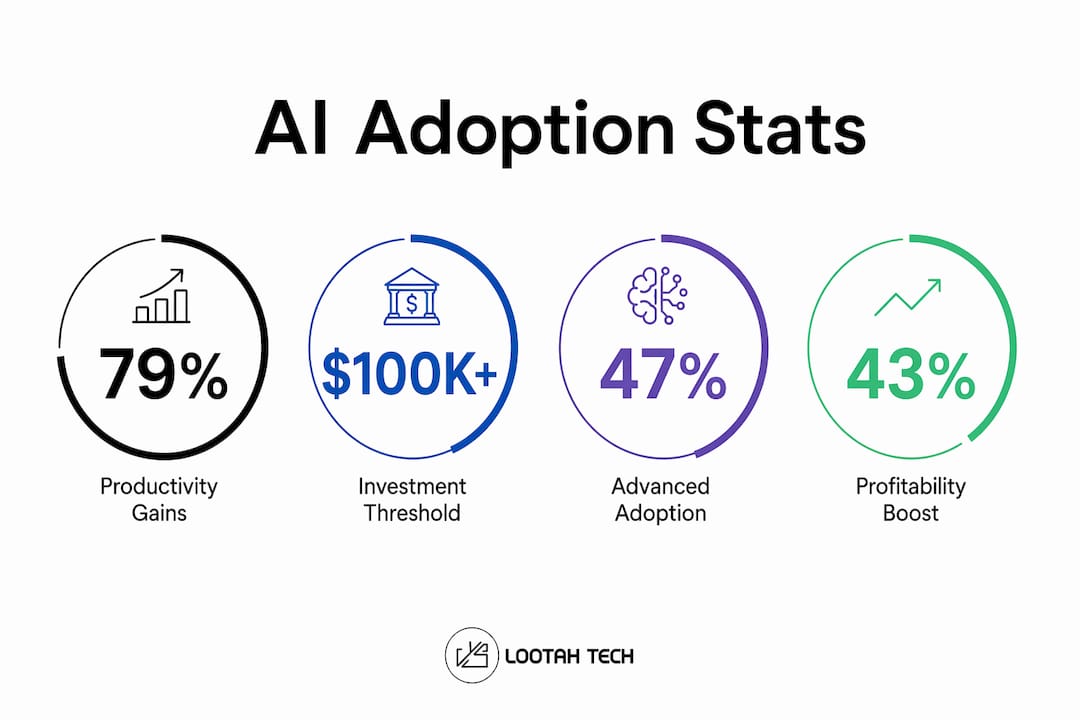
Artificial intelligence in fintech is defined as the application of machine learning, natural language processing, and predictive analytics to financial services, making them faster, more accurate, and more profitable. As of april 2026, 81% of financial services firms are adopting AI at some level. Fintech companies lead traditional incumbents by a wide margin, with 47% of fintechs at advanced adoption versus 30% for banks. That gap translates directly to the bottom line. Fintechs using AI report significantly higher profitability, and the role of AI in fintech has shifted from experimental to foundational. Finance professionals and tech entrepreneurs who understand this shift hold a real competitive edge.
What are the key AI applications transforming fintech today?
AI in fintech delivers the most measurable value in four core areas: fraud detection, automated underwriting, customer personalization, and regulatory compliance. Each of these functions used to require large teams and slow manual processes. AI compresses that work into seconds.

Fraud detection is where AI proves its worth most visibly. Machine learning models analyze thousands of transaction signals in real time, flagging anomalies that human analysts would miss. These models improve continuously as they process more data, making them far more accurate than static rule-based systems.
Automated underwriting is another area seeing rapid change. AI platforms assess creditworthiness by pulling from a wider range of data points than traditional credit scores, including cash flow patterns, behavioral signals, and alternative data sources. AI for lenders now handles underwriting decisions that once took days in a matter of minutes.
Here are the primary AI use cases reshaping fintech operations right now:
- Engineering and product development: AI accelerates code review, testing, and deployment cycles, cutting time to market for new financial products.
- Customer support: Natural language processing powers virtual assistants that handle account queries, dispute resolution, and onboarding without human agents.
- Know Your Customer (KYC) and compliance: AI automates document verification, sanctions screening, and transaction monitoring, reducing compliance costs and human error.
- Risk modeling: Predictive analytics models assess portfolio risk, market exposure, and counterparty behavior with greater speed and granularity than legacy systems.
- Personalization: AI analyzes spending behavior and financial goals to deliver tailored product recommendations, improving customer retention and cross-sell rates.
Pro Tip: Start AI deployment in your compliance or engineering function first. These areas show the fastest, most measurable returns and build internal confidence for broader rollout.
Real-world AI applications in finance confirm that engineering and compliance generate the strongest near-term gains. Front-office functions like sales and relationship management benefit too, but the lift takes longer to measure.
How do AI adoption trends shape fintech profitability?
The data on AI adoption and profitability is direct: investment level determines outcome. Firms spending over $100,000 annually on AI are significantly more likely to achieve advanced maturity and report increased profitability. That threshold separates serious deployments from underfunded pilots that stall before delivering results.
Productivity gains from AI concentrate in technology, data, and product functions, where 79% of firms report gains. Front-office impact is more moderate at 69%. The gap matters because many fintech leaders expect AI to immediately boost revenue. The reality is that back-office efficiency comes first, and revenue impact follows once those gains compound.
| Area | AI productivity impact | Profitability link |
|---|---|---|
| Technology and engineering | High (79% of firms report gains) | Direct, measurable quickly |
| Data and analytics | High | Enables better decisions across functions |
| Front office and sales | Moderate (69%) | Slower to materialize |
| Compliance and risk | High | Reduces cost and regulatory exposure |
Measuring AI's financial return is genuinely difficult. 43% of firms report no profitability increase from AI, which does not mean AI failed. It means most organizations underinvest and then measure too early.
"Firms must commit significant resources to see material returns. The risk of under-funded pilots is not just wasted money. It is organizational skepticism that blocks future AI investment when it matters most."
The fintech innovation trends driving 2026 adoption confirm this pattern. Fintechs that treat AI as a core budget line, not a discretionary experiment, consistently outperform peers on both efficiency and profitability metrics.
What are the governance and security challenges of AI in fintech?
AI governance is the single most underdeveloped capability in fintech today. Most firms deploy AI faster than they build the oversight structures to manage it. The Federal Reserve has stated clearly that firms should not outpace their governance capabilities when integrating AI into financial systems. That warning reflects real regulatory risk.
The four governance challenges that matter most are:
- Explainability: Regulators and auditors require that AI-driven decisions, especially in credit and underwriting, can be explained in plain terms. Black-box models create legal exposure.
- Algorithmic bias: AI trained on historical financial data can encode and amplify existing biases. Bias audits and diverse training datasets are not optional. They are compliance requirements.
- Model drift: AI models degrade over time as market conditions change. Continuous validation is the only way to catch drift before it causes material errors.
- Cybersecurity: AI introduces new attack surfaces. 84% of banking leaders are increasing cybersecurity budgets specifically to counter AI-specific threats, including adversarial attacks on model inputs and data pipeline breaches.
Pro Tip: Build a governance watchtower before you scale. This means automated controls testing, a human oversight committee, and a model registry that tracks every AI system in production.
Standardization and formal AI governance structures lead to better financial outcomes. Firms that document their AI systems, set explainability standards, and run continuous validation consistently achieve higher revenue growth and cost savings than those that do not. Governance is not a compliance burden. It is a performance driver.
Cybersecurity must be treated as integral to every AI initiative, not a separate workstream. Data lineage, identity management, and real-time monitoring are the three pillars that keep AI projects from failing after launch.
How can fintech companies integrate AI for sustained competitive advantage?
Sustained AI advantage comes from organizational design, not just technology selection. Redesigning the product development cycle around AI capabilities can speed development fivefold compared to treating AI as an add-on. That is not a marginal improvement. It changes the competitive dynamics of product launches entirely.
The firms pulling ahead share a common structure:
- AI embedded in product cycles from day one: Requirements, testing, and deployment all assume AI involvement rather than retrofitting it later.
- Dedicated AI investment above the $100,000 annual threshold: This level of spending correlates directly with advanced maturity and profitability gains.
- Governance watchtowers with human oversight: Automated controls testing combined with human review catches errors before they reach customers or regulators.
- M&A and partnerships to close capability gaps: 77% of banking leaders see technology capabilities, including AI, as a primary driver of acquisition strategy. Buying proven AI capabilities is faster than building them from scratch.
The table below shows how AI integration depth affects key business outcomes:
| Integration approach | Development speed | Profitability impact | Governance readiness |
|---|---|---|---|
| AI as add-on to existing processes | Slow | Low | Fragmented |
| AI embedded in select functions | Moderate | Moderate | Partial |
| AI redesigned into full product cycle | Fast (up to 5x) | High | Structured |
Fintech solutions for business leaders that embed AI at the architecture level consistently outperform those that layer it on top of legacy workflows. The lesson is clear: integration depth is the variable that matters most.
What emerging trends will shape the future of AI in banking and fintech?
The next phase of AI in financial services moves beyond automation into generation and agency. Generative AI is already producing first drafts of credit memos, regulatory filings, and customer communications. Agentic AI, where models take multi-step actions autonomously, is entering treasury management and trade execution.
Key trends shaping the future of AI in fintech include:
- Generative AI in financial analysis: Large language models trained on financial data produce research summaries, risk narratives, and compliance documentation at a fraction of the previous cost.
- Agentic AI in operations: AI agents that execute workflows autonomously are entering areas like reconciliation, loan servicing, and fraud case management.
- Regulatory convergence: Regulators across the US, EU, and UAE are aligning on AI disclosure and explainability requirements. Firms that build these capabilities now will face fewer compliance disruptions as rules formalize.
- Human-in-the-loop controls: As AI autonomy increases, regulators are requiring documented human checkpoints for high-stakes decisions. This is not a slowdown. It is a design requirement.
- AI-enabled product innovation: New financial products, including personalized insurance, dynamic credit lines, and AI-curated investment portfolios, are emerging directly from AI capabilities rather than from traditional product design processes.
80% of banking executives expect AI to disrupt business and operating models within three to five years. That timeline is short. Fintech leaders who wait for the technology to mature before investing will find themselves behind firms that are already scaling today. The AI trends shaping enterprises in 2026 confirm that the window for first-mover advantage in AI-native financial products is narrowing fast.
Key Takeaways
AI in fintech creates measurable competitive advantage when firms invest adequately, embed governance from the start, and redesign product cycles around AI capabilities rather than adding AI as an afterthought.
| Point | Details |
|---|---|
| Investment threshold matters | Firms spending over $100,000 annually on AI are significantly more likely to achieve advanced maturity and profitability. |
| Governance drives outcomes | Standardized AI governance with explainability and continuous validation consistently produces better financial results. |
| Back-office gains come first | Technology, data, and compliance functions show the strongest near-term AI productivity gains at 79% of firms. |
| Integration depth is the key variable | Redesigning product cycles around AI can accelerate development up to fivefold versus bolting AI onto legacy processes. |
| Cybersecurity is non-negotiable | 84% of banking leaders are increasing cybersecurity budgets to address AI-specific threats to data pipelines and models. |
AI in fintech: what I've learned from the inside
The firms I see succeeding with AI in fintech share one trait that rarely makes it into industry reports: they treat governance as a product, not a policy document. They assign engineers to it. They run it in sprints. They measure it like they measure uptime.
The firms that struggle do the opposite. They build impressive AI demos, then discover six months later that no one owns model validation, explainability documentation is missing, and the compliance team was never consulted. That is not an AI problem. It is an organizational design problem that AI exposed.
The other pattern I keep seeing is underinvestment disguised as caution. A $30,000 pilot budget is not caution. It is a guarantee of failure. The data is clear that material returns require material commitment. Underfunded pilots produce skepticism, not insight.
My honest advice for fintech leaders: pick one high-friction operational area, fund it properly, build the governance structure alongside the model, and measure ruthlessly. That single successful deployment will do more for your AI program than ten exploratory pilots ever will. AI is a force multiplier, but only for organizations willing to redesign around it.
— YS
Yslootahtech's AI services for fintech teams
Fintech firms that want to move from AI experimentation to production-grade deployment need more than a model. They need architecture, governance, and security built in from the start.
Yslootahtech delivers AI and machine learning services purpose-built for financial services, covering everything from custom model development to compliance-ready deployment frameworks. The team brings deep experience in secure AI integration, data pipeline architecture, and governance design for regulated industries. Whether you are building your first AI-powered fintech product or scaling an existing deployment, Yslootahtech provides the technical depth and strategic support to do it right.
FAQ
What is the role of AI in fintech?
AI in fintech is the use of machine learning, predictive analytics, and natural language processing to automate and improve financial services. Core applications include fraud detection, automated underwriting, compliance monitoring, and personalized customer experiences.
How does AI affect profitability in financial services?
Firms spending over $100,000 annually on AI are significantly more likely to report increased profitability. However, 43% of firms still report no profitability gain, typically because of underfunded pilots or insufficient governance structures.
What are the biggest risks of using AI in fintech?
The main risks are algorithmic bias, model drift, lack of explainability, and cybersecurity vulnerabilities. Regulators require firms to document AI decisions and maintain human oversight, especially for credit and underwriting functions.
How do fintechs lead traditional banks in AI adoption?
Fintechs report 47% advanced AI adoption versus 30% for traditional incumbents. This gap reflects fintechs' willingness to redesign product cycles around AI rather than integrating it into legacy systems.
What is a governance watchtower in AI?
A governance watchtower is a framework combining automated controls testing, continuous model validation, and human oversight committees. Firms that implement this structure consistently achieve better revenue growth and cost savings from AI deployments.