Oil and Gas Digital Transformation: 2026 Industry Guide
TL;DR:
- Digital transformation in oil and gas involves integrating AI, IoT, cloud, and automation into connected workflows. Early adopters can generate significant value, improve efficiency, and enhance safety through unified ecosystems rather than isolated tools. Success depends on addressing data quality, organizational change, and interoperability challenges.
Oil and gas digital transformation is defined as the systematic integration of AI, automation, IoT, cloud computing, and advanced analytics to fundamentally reshape how energy companies explore, produce, and operate. The industry term for this shift is "digital oilfield" or "connected operations," and both phrases describe the same strategic reality: replacing fragmented, analog workflows with a connected, data-driven ecosystem. Digitalization and AI represent a $500 billion opportunity for exploration and production companies from 2026 to 2030. That number signals a structural shift, not an incremental upgrade. For industry professionals evaluating where to invest and how to compete, understanding what drives this transformation is the starting point for every decision that follows.
What is oil and gas digital transformation, and why does it matter now?
Digital transformation in oil and gas is not simply moving paperwork online. True transformation involves a paradigm shift toward fully integrated, data-driven workflows that span every operational layer, from the wellhead to the boardroom. The shift from analog to digital is only the first step. The real competitive advantage comes when interoperability, agile processes, and democratized knowledge replace siloed departments and disconnected tools.
The strategic objectives are consistent across operators: reduce costs, improve safety, accelerate production, and maintain competitiveness as energy markets grow more volatile. Early adopters could generate $80 billion more annual value by 2030 than companies that delay. That gap will widen as AI capabilities mature and data volumes grow. Operators who treat digital transformation as a future priority rather than a present one are already falling behind.
A study involving 240 professionals confirms that digital maturity is driven primarily by technology adoption and clear value delivery to stakeholders. This finding matters because it shifts the conversation away from technology for its own sake and toward measurable outcomes that justify investment.
What core technologies drive digital transformation in oil and gas?
The technology stack behind oil gas industry transformation is broader than most operators initially plan for. No single tool delivers the shift. The value comes from how these technologies connect.
The primary technologies shaping the sector include:
- Artificial intelligence and machine learning: AI models analyze drilling data in real time, predict equipment failures before they occur, and recommend production adjustments without human intervention.
- IoT sensors and edge computing: Thousands of sensors on wellheads, pipelines, and rigs generate continuous data streams. Edge computing processes that data locally, reducing latency and enabling faster decisions.
- Digital twins: Virtual replicas of physical assets allow engineers to simulate operational scenarios, test changes, and identify risks without touching live equipment.
- Cloud computing: Centralized cloud platforms give distributed teams access to the same data, models, and dashboards, regardless of location.
- Automation and robotics: Automated systems handle repetitive, high-risk tasks. Robotic inspection tools work in environments too dangerous for human crews.
Pro Tip: Do not evaluate these technologies in isolation. The return on investment multiplies when AI, IoT, and cloud platforms share data through open APIs rather than operating as separate systems.
ADNOC's AD-300 rig illustrates what full integration looks like in practice. The AD-300 delivered nearly 3 months ahead of schedule using AI-driven automation and hybrid power systems. That result was not the product of one technology. It came from AI, automation, and power management working as a single system. For AI integration in energy operations, the architecture of how tools connect matters as much as the tools themselves.
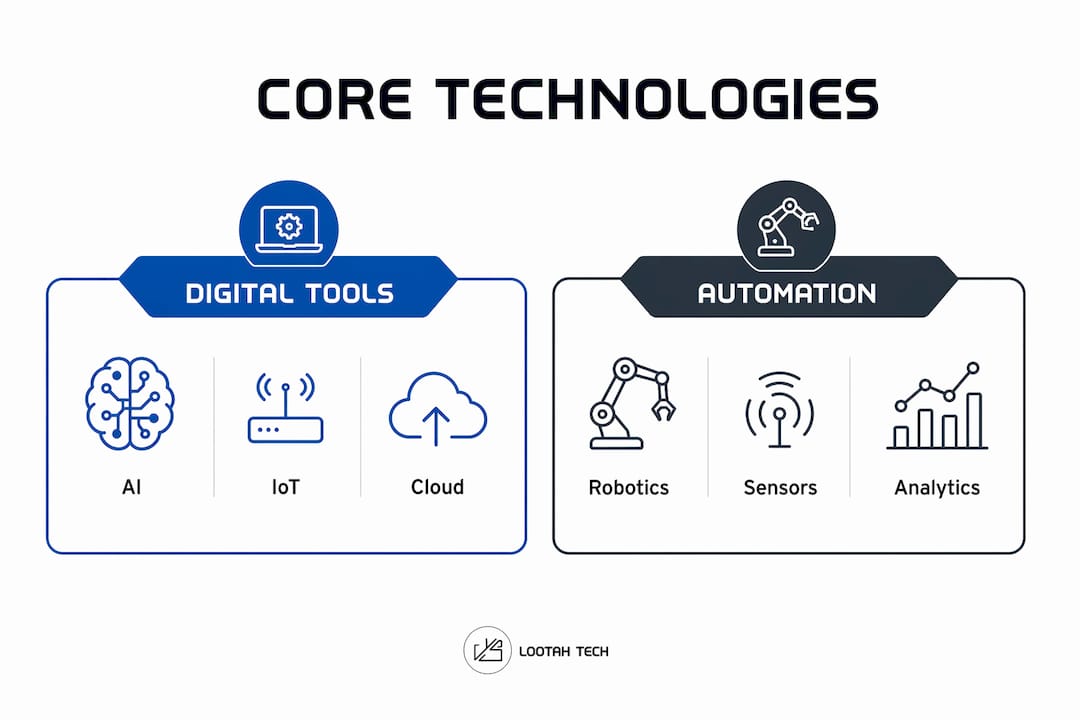
Digitally transformed operators prioritize connected, intelligent ecosystems rather than digitizing isolated silos. This distinction separates companies that see incremental gains from those that achieve structural efficiency improvements.
How does digital transformation improve operational efficiency and competitiveness?
The efficiency gains from digital transformation in oil and gas are measurable and significant. Halliburton and Eni completed the first integrated closed-loop rig automation in deepwater Indonesia in july 2026, demonstrating more than 15% drilling efficiency improvement while maintaining well control in a challenging deepwater environment. A 15% efficiency gain in deepwater drilling translates directly into lower cost per barrel and faster project payback.
The mechanisms behind these gains fall into three categories:
- Predictive maintenance: AI models trained on sensor data identify equipment degradation weeks before failure. Operators schedule maintenance during planned downtime rather than reacting to costly unplanned shutdowns.
- Automated decision-making: Closed-loop systems adjust drilling parameters, flow rates, and pressure settings in real time without waiting for human approval. This reduces human error and accelerates response times.
- Production optimization: Machine learning models continuously analyze reservoir data and surface conditions to recommend the production settings that maximize output at the lowest cost.
The competitive dimension is equally important. Accelerated AI adoption could raise annual value creation to $150 billion by 2030. Operators who build connected digital ecosystems now will have the data history, trained models, and organizational capability to capture that value. Those who wait will face a steeper climb to catch up, with less time to do it.
Safety improvements are a direct byproduct of automation. Removing human crews from high-risk tasks, such as manual wellhead inspections or deepwater equipment handling, reduces incident rates. Digital monitoring systems also detect gas leaks, pressure anomalies, and structural stress faster than any manual inspection cycle.
What are common challenges and best practices in implementing digital transformation?
The biggest obstacle to digital transformation in oil and gas is not technology. It is data. Legacy data fragmentation, often called "data debt," seriously impedes AI effectiveness. Without reliable, integrated data inputs, even the most sophisticated AI software produces unreliable outputs. Decades of operational data stored in incompatible formats, disconnected systems, and paper records cannot feed modern machine learning models without significant cleansing and restructuring.
The organizational challenges compound the technical ones. Siloed departments protect their data and processes. Cultural resistance to automation is real, particularly among experienced field crews who view digital tools as threats rather than aids. Governance structures built for hierarchical decision-making slow down the agile, data-driven workflows that digital transformation requires.
A validated approach to overcoming these challenges follows a clear sequence:
- Audit and cleanse legacy data. Map all existing data sources, identify gaps and inconsistencies, and build a data quality baseline before deploying any AI tool.
- Establish interoperability standards. Require all new technology vendors to support open APIs and common data formats. Reject proprietary systems that cannot connect to the broader ecosystem.
- Apply a digital maturity framework. Use a measurement model that integrates financial, technological, and sustainability metrics to track progress and justify continued investment.
- Restructure decision rights. Successful transformation requires rethinking funding structures and organizational design to remove hierarchical bottlenecks that limit AI-driven automation.
- Build cross-functional teams. Digital transformation succeeds when data scientists, engineers, and operations managers work in the same room toward the same metrics.
Pro Tip: Treat data cleansing as a capital project, not an IT task. Assign a budget, a timeline, and an executive sponsor. Companies that fund data quality at the same level as hardware procurement see faster AI returns.
Energy project teams working through digital project development challenges consistently report that data integration decisions made early in the transformation process determine how much value AI tools can deliver later.
Key practical applications and future trends in oil and gas digital transformation
Real-world applications of digital transformation in oil and gas are accelerating across every operational domain. Remote operation centers now manage multiple wells and rigs from a single onshore location, reducing the headcount required offshore and cutting logistics costs. Agentic AI systems, which take autonomous actions based on defined goals rather than waiting for human commands, are beginning to break down the organizational silos that have historically slowed decision-making.
The trends shaping the next phase of how oil and gas is transforming digitally include:
- Integrated real-time automation: Closed-loop systems that monitor, decide, and act without human intervention are moving from pilot projects to standard operating procedure at leading operators.
- Agentic AI for cross-functional workflows: AI agents that coordinate across reservoir management, drilling, and production planning eliminate the handoff delays that cost operators time and money.
- ESG and sustainability integration: Digital platforms now track emissions, water use, and energy consumption in real time, giving operators the data they need to meet regulatory requirements and investor expectations.
- Technology partnerships at scale: Operator partnerships are evolving from transactional services to integrated technology partnerships that leverage ecosystems, platforms, and AI tools deployed at scale. This model reduces complexity and accelerates deployment.
| Application area | Technology used | Primary benefit |
|---|---|---|
| Drilling optimization | Closed-loop AI automation | 15%+ efficiency improvement |
| Predictive maintenance | IoT sensors, machine learning | Reduced unplanned downtime |
| Remote operations | Cloud platforms, digital twins | Lower offshore headcount costs |
| ESG monitoring | Real-time analytics dashboards | Regulatory compliance, investor reporting |
| Reservoir management | AI modeling, data integration | Higher production at lower cost |
AI strategies in energy planning increasingly focus on interoperability between AI tools and existing operational systems, which is the factor that separates pilots that scale from pilots that stall. For a broader view of AI applications in 2026, the oil and gas sector is among the most active in deploying AI at the operational level.
Key Takeaways
Digital transformation in oil and gas requires connected ecosystems, clean data, and integrated AI to deliver the $500 billion in value that early adopters will capture by 2030.
| Point | Details |
|---|---|
| Definition is precise | Digital transformation means integrated AI, IoT, cloud, and automation working as one system, not digitized silos. |
| Financial stakes are clear | Early adopters could generate $80 billion more annual value by 2030 than operators who delay adoption. |
| Data quality comes first | Legacy data fragmentation blocks AI effectiveness; cleansing historical data is the foundational step before any AI deployment. |
| Efficiency gains are proven | Closed-loop rig automation delivered more than 15% drilling efficiency improvement in a real deepwater project in 2026. |
| Ecosystem thinking wins | Operators who build interoperable, connected platforms outperform those who deploy standalone digital tools. |
The uncomfortable truth about digital transformation in oil and gas
Most operators I work with understand that digital transformation matters. Far fewer understand what actually blocks it. The conversation almost always starts with technology: which AI platform, which cloud provider, which sensor network. That is the wrong starting point.
The real constraint is organizational. Decision rights in oil and gas companies were built for a world where information moved slowly and expertise lived in individuals. AI-driven automation requires the opposite: fast information flow, shared data, and systems that can act without waiting for approval chains. Until leadership restructures how decisions get made and how data gets owned, the technology investment will underperform.
The companies I see capturing real value are not necessarily the ones with the most advanced tools. They are the ones that treated data quality as a prerequisite, built cross-functional teams with shared accountability, and committed to interoperability from day one. The AD-300 rig and the Halliburton-Eni deepwater project did not succeed because of one brilliant technology choice. They succeeded because every system in the stack was designed to connect.
The $150 billion annual value potential by 2030 is real. So is the risk of spending heavily on digital tools that cannot talk to each other. The operators who will capture that value are the ones making hard organizational decisions now, not just technology purchases.
— YS
How Yslootahtech supports oil and gas digital transformation
Yslootahtech works with energy sector organizations to build the connected digital foundations that make AI and automation deliver real results. The team specializes in AI and machine learning solutions designed for complex industrial environments, where data quality, interoperability, and system integration determine whether a digital investment pays off.
Yslootahtech also brings deep UX/UI design expertise to digital transformation projects, because even the most powerful AI platform fails if field engineers and operations managers cannot use it effectively. Poor adoption is one of the most common reasons digital transformation projects underdeliver. Yslootahtech designs interfaces that fit how operational teams actually work, which drives adoption and accelerates the return on digital investment.
FAQ
What is oil and gas digital transformation?
Oil and gas digital transformation is the integration of AI, IoT, cloud computing, automation, and analytics into a connected operational ecosystem. The goal is to replace fragmented, analog workflows with data-driven processes that improve efficiency, safety, and competitiveness.
What are the main benefits of digital transformation in oil and gas?
The primary benefits include lower operating costs through predictive maintenance, higher drilling efficiency through automation, improved safety by removing crews from high-risk tasks, and faster, data-driven decision-making across production and reservoir management.
What is the biggest challenge in implementing digital transformation?
Legacy data fragmentation, or "data debt," is the most common barrier. Without clean, integrated historical data, AI tools cannot produce reliable outputs, regardless of how advanced the software is.
How much value can digital transformation create in oil and gas?
Digitalization and AI represent a $500 billion opportunity for exploration and production companies from 2026 to 2030, with early adopters potentially generating $80 billion more in annual value by 2030.
What does a digitally transformed oil and gas operator look like?
A digitally transformed operator runs a connected, intelligent ecosystem where IoT, cloud, AI, and automation share data in real time. Decisions happen faster, maintenance is predictive rather than reactive, and remote operation centers manage assets that once required large on-site crews.