Key cloud computing trends to boost business in 2026

Cloud computing is growing faster than many expect in 2026. Global public cloud spending will surpass $1 trillion with 21% growth year over year, driven by platform and AI services. Enterprises increasingly focus on business value over cost in cloud investments, shifting priorities from pure optimization to strategic outcomes. The landscape includes hybrid, multi-cloud, AI platforms, and private clouds, each offering distinct advantages for digital transformation. Understanding these trends helps business leaders and IT professionals make informed decisions that enhance competitive advantage and operational efficiency.
Table of Contents
- Key takeaways
- The evolving landscape of cloud spending and adoption
- Hybrid, multi-cloud, and private cloud strategies reshaping IT infrastructure
- Advances in edge and serverless computing accelerating AI and workload efficiency
- Optimizing cloud resource management with AI-driven forecasting and FinOps frameworks
- Explore cloud and AI solutions with YS Lootah Tech
- Frequently asked questions about cloud computing trends in 2026
Key Takeaways
| Point | Details |
|---|---|
| Public cloud hits $1T | Global public cloud spending is set to surpass one trillion dollars in 2026, led by SaaS, PaaS, and AI platform growth with strong year over year gains. |
| Value over cost | Leaders prioritize business value outcomes over cost optimization in cloud strategy. |
| Hybrid and multi cloud | Adoption exceeds 70 percent as firms blend public clouds with private infrastructure and multiple providers. |
| Private clouds and AI upgrades | Private clouds and AI driven upgrades reshape enterprise strategies and accelerate digital transformation. |
| FinOps and value metrics | Cost management now emphasizes measurable business outcomes and return on investment over simple savings. |
The evolving landscape of cloud spending and adoption
Public cloud continues rapid growth, mainly in SaaS, PaaS, and AI platforms. SaaS represents over 50% of cloud expenditures, while PaaS grows faster than infrastructure services due to developer productivity gains and AI integration capabilities. This shift reflects how organizations now view cloud as a strategic enabler rather than just infrastructure replacement.
Business value metrics now outrank cost concerns in cloud strategy. 64% of organizations prioritize business value outcomes over cost optimization for cloud services. This represents a fundamental change from previous years when cost management dominated cloud discussions. Leaders recognize that the right cloud investments accelerate innovation, improve customer experiences, and create competitive differentiation that far exceeds savings from aggressive cost cutting.
Hybrid and multi-cloud architectures emerge as dominant adoption models. Organizations combine public cloud services with private infrastructure and multiple providers to achieve specific goals. This complexity requires careful planning but delivers significant benefits:
- Resilience through geographic and vendor diversification reduces single points of failure
- Workload optimization by matching applications to ideal platforms based on performance, cost, and compliance requirements
- Negotiating leverage with vendors through credible multi-cloud strategies
- Regulatory compliance by keeping sensitive data in controlled environments while using public cloud for other workloads
The cloud market complexity requires strategic investment decisions. Simply migrating everything to public cloud no longer represents best practice. Understanding cloud computing innovation trends helps leaders evaluate which workloads benefit from public cloud, which need private infrastructure, and how to integrate these environments effectively. Organizations succeeding in 2026 treat cloud architecture as a strategic capability requiring ongoing evaluation and adjustment.
"The convergence of cloud and business value marks a maturity shift where technology decisions directly tie to measurable business outcomes rather than purely technical or financial metrics."
This maturity enables conversations between IT and business leaders focused on outcomes like faster time to market, improved customer satisfaction scores, and revenue growth from new digital services. Cloud spending discussions now center on return on investment and strategic advantage rather than just infrastructure costs.
Hybrid, multi-cloud, and private cloud strategies reshaping IT infrastructure
Hybrid and multi-cloud now represent the norm for balancing reliability and vendor diversity. Adoption exceeds 70% as organizations recognize that no single cloud provider offers optimal solutions for every workload. This approach allows businesses to select best-of-breed services while maintaining flexibility to shift workloads as requirements change or better options emerge.
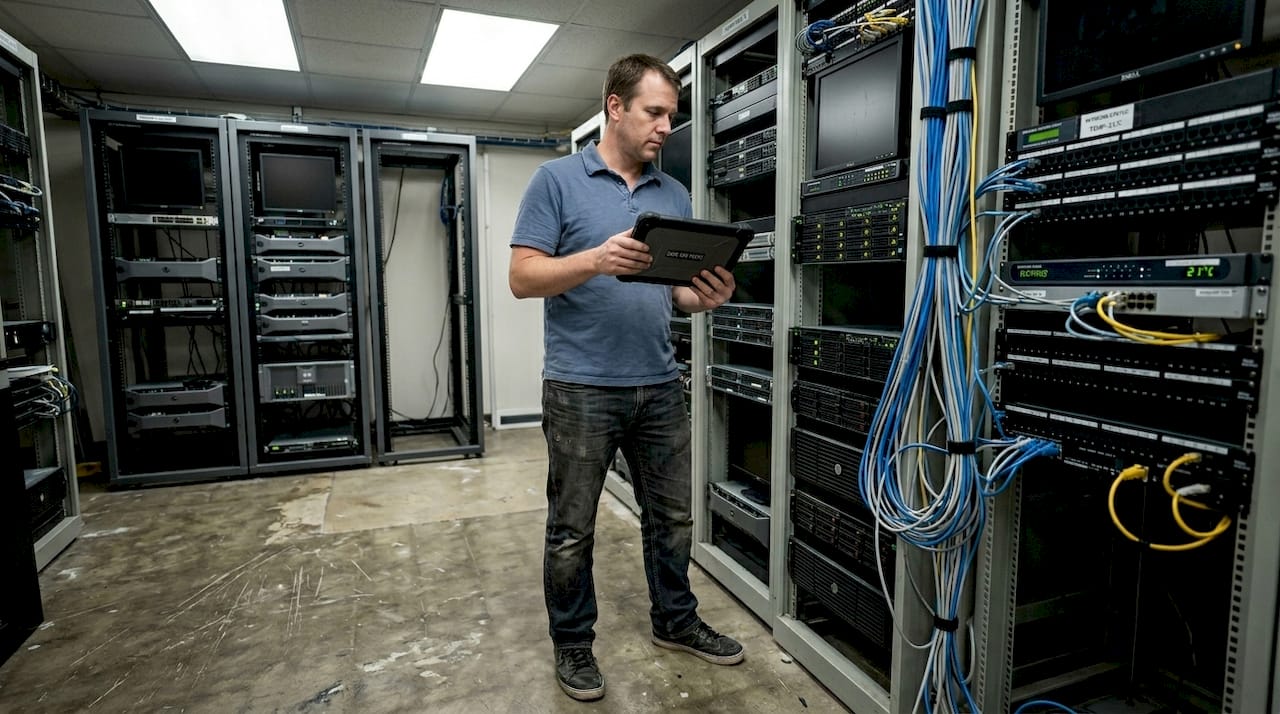
Private and sovereign clouds grow for data sovereignty and control needs. 53% of IT leaders are building private or sovereign clouds to address regulatory requirements, data residency mandates, and security concerns that public cloud alone cannot satisfy. Industries like financial services, healthcare, and government particularly drive this trend as they balance cloud benefits with strict compliance obligations.
Private AI clouds gain traction for sensitive AI workloads. 15% of enterprises will shift AI workloads to private AI clouds for data control and compliance. Training large language models and running AI inference on proprietary data raises intellectual property and privacy concerns that private infrastructure addresses. Organizations building competitive advantage through AI increasingly view private AI clouds as strategic assets worth the investment.
The following table compares deployment models to help evaluate which approach fits specific business requirements:
| Deployment Model | Best For | Key Advantages | Primary Considerations |
|---|---|---|---|
| Public Cloud | Variable workloads, rapid scaling, standard applications | Lowest initial cost, fastest deployment, automatic updates | Data sovereignty limits, vendor lock-in risk |
| Private Cloud | Regulated industries, predictable workloads, sensitive data | Maximum control, customization, compliance support | Higher capital costs, requires skilled staff |
| Hybrid Cloud | Mixed workload types, gradual migration, disaster recovery | Flexibility, workload optimization, risk distribution | Integration complexity, management overhead |
| Multi-Cloud | Vendor diversification, best-of-breed selection, geographic reach | Avoid lock-in, leverage competition, resilience | Increased complexity, skills requirements across platforms |
Successful hybrid and multi-cloud strategies require several key capabilities:
- Unified management tools that provide visibility across all environments
- Consistent security policies and identity management regardless of workload location
- Network architecture supporting secure, high-performance connectivity between clouds
- Skills development programs ensuring teams can operate diverse platforms effectively
Pro Tip: Evaluate private cloud investments by calculating the total cost of compliance violations, data breaches, or competitive disadvantage from delayed AI initiatives. When these risks exceed private cloud costs, the investment makes strategic sense even if public cloud appears cheaper on paper.
Organizations exploring these architectures benefit from understanding enterprise app innovations that leverage hybrid environments effectively. The future of enterprise cloud computing involves seamless integration across deployment models rather than choosing one approach exclusively.
Advances in edge and serverless computing accelerating AI and workload efficiency
Edge computing now leverages serverless for ultra-low latency. Traditional edge deployments required managing infrastructure at distributed locations, creating operational complexity. Serverless edge functions eliminate this burden by providing code execution environments that scale automatically without server management. This combination delivers cloud-like developer experience with edge-like performance.
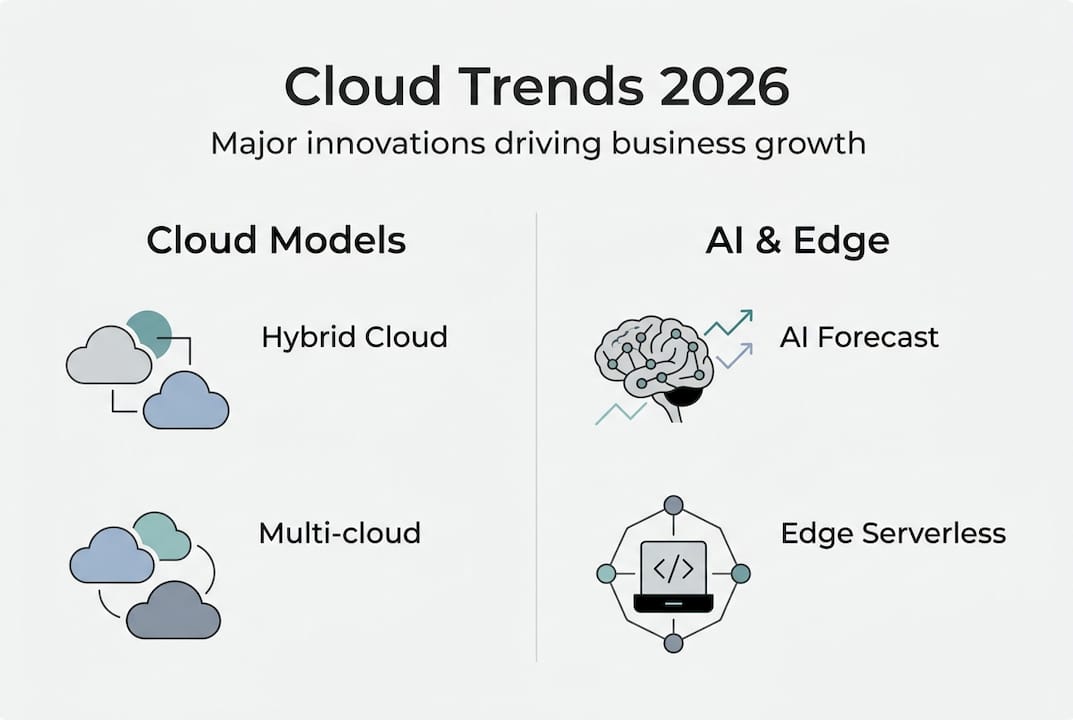
AI inference at the edge cuts costs drastically versus cloud inference. Running AI inference at the edge costs 90% less than cloud-based inference while reducing latency to single-digit milliseconds. For applications processing video streams, IoT sensor data, or real-time recommendations, these improvements transform what's technically and economically feasible. Organizations deploying thousands of endpoints find edge inference changes cost structures from prohibitively expensive to highly profitable.
The following data illustrates performance and cost differences between edge and cloud serverless deployments:
| Metric | Edge Serverless | Cloud Serverless | Improvement Factor |
|---|---|---|---|
| Cold Start Time | <1ms | 100-500ms | 100-500x faster |
| AI Inference Cost | $0.10 per 1M requests | $1.00 per 1M requests | 10x cheaper |
| Network Latency | 1-5ms | 50-200ms | 10-40x lower |
| Bandwidth Costs | Minimal (local processing) | High (data transfer fees) | 80-95% reduction |
| Scalability | Automatic, distributed | Automatic, centralized | Comparable |
Performance and cost tradeoffs require workload-specific evaluation. Empirical analysis shows cost-performance tradeoffs vary significantly based on workload characteristics like data volume, processing complexity, and access patterns. Edge excels for latency-sensitive applications with high request volumes, while cloud serverless remains optimal for workloads requiring massive compute bursts or complex orchestration.
Follow these steps to assess edge serverless suitability for your workloads:
- Map current application latency requirements and identify components where sub-10ms response times create business value through improved user experience or operational efficiency.
- Calculate data transfer volumes between users or devices and your cloud infrastructure, then estimate bandwidth cost savings from local edge processing.
- Evaluate AI inference frequency and costs, comparing cloud-based inference expenses against edge deployment for high-volume use cases.
- Review compliance and data residency requirements that might mandate local processing, making edge deployment necessary regardless of cost considerations.
- Prototype critical workloads on edge platforms to measure actual performance gains and validate cost models before full migration.
- Design hybrid architectures where edge handles real-time processing while cloud manages training, analytics, and complex orchestration tasks.
Pro Tip: Choose edge serverless frameworks offering predictable pricing and transparent performance guarantees. Some platforms charge per request while others use capacity-based pricing. Match the pricing model to your workload patterns to avoid surprise bills when traffic spikes.
Business leaders exploring edge computing should consider how innovative tech strategies integrate edge capabilities into broader digital transformation initiatives. Edge computing works best as part of a comprehensive architecture rather than an isolated technology deployment.
Optimizing cloud resource management with AI-driven forecasting and FinOps frameworks
AI-driven forecasting increases efficiency and meets SLAs reliably. Federated deep learning improves resource utilization with over 95% forecast accuracy for predicting workload demands. Traditional reactive scaling responds to load changes after they occur, causing either resource waste during over-provisioning or performance degradation during under-provisioning. Predictive models analyze historical patterns, seasonal trends, and external factors to anticipate demand changes before they happen.
Proactive auto-scaling outperforms reactive methods in variable workloads. Systems using AI forecasts provision resources minutes before demand spikes rather than seconds after, eliminating the performance dips that frustrate users and violate SLAs. For applications with predictable patterns like daily business cycles or weekly reporting peaks, proactive scaling reduces costs by 20 to 40% compared to conservative over-provisioning strategies.
Rapid rise of FinOps and Cloud Centers of Excellence for cost-value governance transforms how organizations manage cloud investments. 64% of organizations expanded FinOps teams, with 71% having Cloud Centers of Excellence for governance and value. These teams bridge finance, technology, and business units to ensure cloud spending aligns with strategic priorities rather than accumulating through uncoordinated departmental decisions.
Adopting AI-driven resource and financial management delivers multiple benefits:
- Real-time visibility into cloud costs across all accounts, projects, and business units enables rapid identification of waste and optimization opportunities
- Automated policy enforcement prevents costly mistakes like leaving expensive resources running after testing or deploying oversized instances
- Capacity planning accuracy improves through machine learning models that account for business growth, seasonal patterns, and product launch impacts
- Showback and chargeback mechanisms create accountability by attributing costs to consuming teams, encouraging responsible resource usage
- Continuous optimization recommendations identify rightsizing opportunities, reserved instance purchases, and architectural improvements
"Organizations with mature FinOps practices and Cloud Centers of Excellence report 30% better cloud ROI compared to those managing cloud spending through traditional IT budgeting approaches."
Strategic cloud governance frameworks maximize business value by connecting technical decisions to business outcomes. Instead of simply minimizing cloud bills, successful organizations optimize the ratio of business value delivered to resources consumed. This might mean spending more on cloud services that directly drive revenue while aggressively cutting waste in non-critical systems.
Implementing these frameworks requires cultural change beyond just tools and processes. Finance teams must understand cloud's variable cost model and consumption-based pricing. Engineering teams need visibility into costs and incentives to optimize. Business leaders should evaluate cloud investments using the same ROI frameworks applied to other strategic initiatives.
Organizations building these capabilities often benefit from external expertise. IT consulting services help establish FinOps practices, select appropriate tools, and train teams on cloud financial management. The investment in proper governance frameworks typically pays for itself within months through identified savings and improved decision making.
Explore cloud and AI solutions with YS Lootah Tech
Navigating 2026's cloud landscape requires both technical expertise and strategic vision. YS Lootah Tech offers tailored solutions aligning with current cloud and AI trends to help businesses leverage these technologies for transformation and competitive advantage. Whether you're evaluating hybrid cloud architectures, implementing AI workloads, or optimizing existing cloud investments, partnering with experienced specialists accelerates results.
Our application development services build cloud-native applications designed for the hybrid and multi-cloud environments dominating 2026. We integrate AI and machine learning solutions that leverage both cloud and edge computing for optimal performance and cost efficiency. Our IT consulting services guide your cloud strategy, helping you implement FinOps frameworks, establish Cloud Centers of Excellence, and make informed decisions about private versus public cloud investments. Partnering with experts who understand both technology capabilities and business requirements helps you avoid costly mistakes while capturing opportunities faster than competitors still figuring out these complex trends.
Frequently asked questions about cloud computing trends in 2026
What are the most important cloud computing trends in 2026?
The dominant trends include hybrid and multi-cloud adoption exceeding 70% of enterprises, AI-driven cloud spending surpassing $1 trillion annually, rapid FinOps framework adoption with 64% of organizations expanding financial management teams, and edge computing advances enabling 90% cost reductions for AI inference workloads. Private and sovereign clouds also grow significantly as 53% of IT leaders build them for compliance and data control.
How can businesses adopt cloud trends strategically?
Start by evaluating which workloads benefit most from public cloud versus private infrastructure based on compliance, performance, and cost requirements. Implement FinOps practices and establish a Cloud Center of Excellence to govern spending and align investments with business value rather than just minimizing costs. Consider edge computing for latency-sensitive and high-volume AI inference applications where it delivers substantial performance and cost advantages.
What challenges do cloud computing trends present in 2026?
Cloud outages remain a concern as dependency increases, driving hybrid and multi-cloud strategies for resilience. Managing complexity across multiple platforms requires new skills and unified management tools. Understanding the future of cloud computing helps navigate these challenges through proper architecture planning and governance frameworks that balance flexibility with control.
Why are organizations moving AI workloads to private clouds?
Private AI clouds address data sovereignty, intellectual property protection, and compliance requirements that public cloud cannot fully satisfy for sensitive AI applications. Training models on proprietary data and running inference on confidential information creates risks that 15% of enterprises now mitigate through dedicated private AI infrastructure, accepting higher costs in exchange for complete control over their most strategic AI capabilities.
How does edge computing improve AI application performance?
Edge computing reduces AI inference latency from 50 to 200 milliseconds in cloud deployments down to 1 to 5 milliseconds at the edge, enabling real-time applications previously impossible due to network delays. Combined with serverless architectures achieving sub-millisecond cold starts, edge computing transforms user experiences for applications processing video, IoT data, and interactive AI features while cutting inference costs by 90% through local processing that eliminates expensive data transfer fees.