The Role of Web Design in User Experience and Engagement

TL;DR:
- Web design combines visual layout, site structure, interactivity, and performance to shape user interactions.
- It influences trust, satisfaction, and conversion by affecting how visitors perceive and navigate a website.
Web design is defined as the combination of visual layout, site architecture, interactivity, and technical performance that shapes every interaction a visitor has with your website. The role of web design goes far beyond aesthetics. Users form a credibility judgment in as little as 0.05 seconds, and over half abandon sites that load slowly. That means your website either earns trust in a fraction of a second or loses a customer before a single word is read. For business owners and digital marketing professionals, understanding how design decisions translate into user behavior and revenue is not optional. It is the foundation of every effective digital strategy.
How does web design influence user experience and satisfaction?
Web design shapes user experience through four interconnected layers: visual design, site architecture, technical performance, and accessibility. Each layer affects how visitors feel about your brand and whether they stay long enough to convert.
Visual design: layout, typography, and color
Visual design is the first signal your website sends. Layout determines where the eye travels. Typography signals professionalism or carelessness. Color creates emotional associations before a visitor reads a single headline. A misaligned font choice or a cluttered homepage layout can undermine credibility that took months of marketing to build.
Consistent visual elements across colors, typography, and layout create recognizable brand signals. That consistency is not decorative. It tells returning visitors they are in the right place and tells new visitors the business is organized and trustworthy.
Site architecture and navigation
Navigation is the skeleton of user experience (UX). When visitors cannot find what they need within two or three clicks, they leave. Clear information hierarchy, logical menu structures, and internal linking all reduce the effort a visitor must spend to reach a goal. Reducing that effort directly increases the time spent on site and the likelihood of conversion.

Website design and interactivity have a positive and significant effect on electronic customer satisfaction, outperforming informational content alone. That finding matters because many businesses invest heavily in content while neglecting the structural and interactive quality of the pages that content lives on.
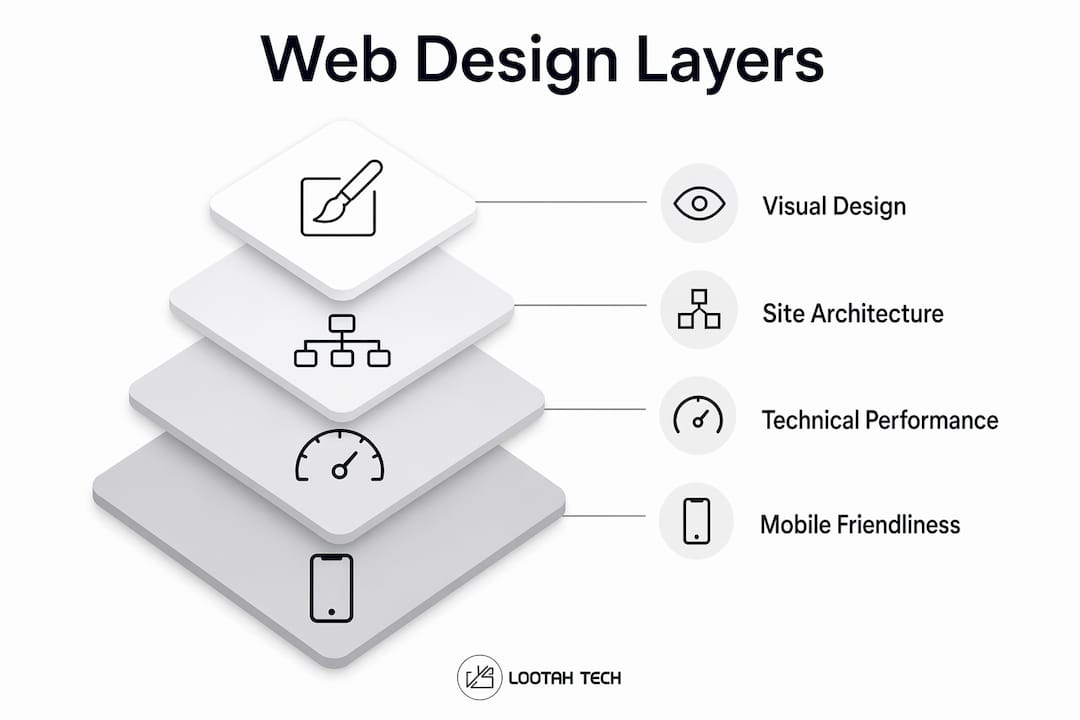
Technical performance and mobile friendliness
Page load speed is a design decision, not just a development concern. Modern web design trends emphasize responsive layouts and mobile-first approaches because the majority of web traffic now comes from mobile devices. A site that renders poorly on a phone is not a minor inconvenience. It is a conversion killer.
Pro Tip: Run your site through Google PageSpeed Insights monthly. A drop in performance score often signals a new plugin, image, or script that is slowing load times before users report it.
- Layout and typography: Control where attention goes and signal brand quality.
- Navigation depth: Keep key pages within two clicks of the homepage.
- Responsive design: Test on at least three screen sizes before any major launch.
- Load speed: Target under three seconds for initial page load on mobile.
- Accessibility: Use sufficient color contrast and alt text to serve all visitors.
What are the key benefits of investing in quality web design for businesses?
Quality web design produces measurable business outcomes, not just a better-looking site. The benefits compound over time as design improvements reduce friction, build trust, and signal authority to both users and search engines.
-
Higher user retention. Tracking user behavior to identify and fix friction points improves satisfaction and keeps visitors coming back. A well-designed site reduces the reasons a visitor has to leave.
-
Stronger brand credibility. Web design is a key success factor influencing user perception, satisfaction, and trust in e-commerce. Businesses that invest in design signal that they take quality seriously across every part of their operation.
-
Better search engine rankings. Search engines factor user experience into rankings, rewarding sites with clear architecture, fast load times, and low bounce rates. Good design and good SEO are not separate disciplines. They reinforce each other.
-
Increased conversion rates. A visitor who trusts your site, finds it easy to navigate, and experiences fast load times is far more likely to complete a purchase, fill out a form, or book a call. Design removes the objections that prevent conversion.
-
Competitive differentiation. In crowded markets, consistent branding and polished design create a perception of quality that generic templates cannot replicate. Businesses that treat design as a cost to minimize often find themselves losing ground to competitors who treat it as an investment.
The importance of web design is growing as digital competition intensifies. Businesses that delay design investment are not saving money. They are deferring a cost that grows larger the longer it waits.
What are the best web design practices to maximize impact in 2026?
Effective web design in 2026 follows a set of principles that balance visual appeal with technical discipline. The goal is a site that performs well for every visitor on every device.
| Design area | Current best practice |
|---|---|
| Responsive design | Build mobile-first; test across iOS, Android, and desktop browsers |
| Load speed | Compress images, minimize scripts, and use a content delivery network |
| Accessibility | Meet WCAG 2.1 AA standards for color contrast, keyboard navigation, and alt text |
| Visual consistency | Apply a defined design system with fixed colors, fonts, and spacing rules |
| User behavior analytics | Use heatmaps and session recordings to identify where visitors drop off |
Accessibility deserves more attention than most businesses give it. Meeting WCAG 2.1 AA standards is not just a legal consideration in many markets. It also widens your audience and signals to search engines that your site serves all users well.
User behavior analytics tools, including heatmaps and session recordings, reveal where visitors click, scroll, and abandon pages. That data turns design decisions from guesses into evidence-based choices. Businesses that use this data consistently outperform those that redesign based on internal opinion alone.
Pro Tip: Before any redesign, audit your current site's heatmap data for at least 30 days. The pages with the highest exit rates and lowest scroll depth are your highest-priority fixes.
The function of website design also extends to how well a site adapts to new technology. AI-driven personalization, voice search compatibility, and progressive web app features are no longer experimental. They are becoming baseline expectations for enterprise-grade digital experiences. Staying current with workplace digitalization trends helps businesses anticipate which design capabilities will matter most in the next 12 months.
How to measure and improve web design effectiveness
Measuring web design effectiveness requires tracking the right indicators and acting on what the data reveals. Without measurement, design improvements are guesses.
The core KPIs for web design performance are:
- Bounce rate: A high bounce rate on key landing pages signals a mismatch between visitor expectations and what the page delivers. Target under 50% for commercial pages.
- Session duration: Longer sessions indicate visitors are finding value. Short sessions on content-heavy pages suggest navigation or readability problems.
- Conversion rate: The percentage of visitors who complete a desired action. Even a 0.5% improvement on a high-traffic page can produce significant revenue gains.
- Page load time: Measured in seconds for both desktop and mobile. Every additional second of load time increases the probability of abandonment.
- Scroll depth: Shows how far visitors read before leaving. Low scroll depth on long pages often points to weak headlines or poor content formatting.
A/B testing is the most reliable method for improving design decisions. Test one variable at a time: a headline, a button color, a form layout, or a page structure. Run each test long enough to reach statistical significance before drawing conclusions. Usability testing with real users adds qualitative depth that analytics alone cannot provide. Watching a real person struggle to find your contact page is more instructive than any bounce rate report.
The impact of web design on engagement metrics is direct and measurable. Businesses that review these KPIs monthly and tie design changes to specific metric improvements build a feedback loop that compounds over time.
Key Takeaways
Web design is the single most visible factor shaping user trust, engagement, and conversion on any digital platform.
| Point | Details |
|---|---|
| First impressions are instant | Users judge credibility in 0.05 seconds, making visual quality a business-critical priority. |
| Design drives satisfaction | Website design and interactivity outperform content alone in driving electronic customer satisfaction. |
| SEO and design are linked | Clear architecture, fast load times, and responsive design all contribute directly to search rankings. |
| Measure before you redesign | Bounce rate, session duration, and conversion rate reveal where design is failing before you spend on fixes. |
| Consistency builds trust | Applying uniform colors, typography, and layout across a site creates brand recognition that retains visitors. |
Web design is a business asset, not a line item
Most businesses treat web design as a one-time project. Build the site, launch it, move on. That approach explains why so many websites quietly erode their own conversion rates over time while the business wonders why digital marketing is underperforming.
The businesses I have seen get the most from their digital presence treat design as a living system. They review analytics monthly. They run A/B tests on high-traffic pages. They update visual elements when brand positioning shifts. They do not wait for a full redesign cycle every three years.
The uncomfortable truth about web design is that most of its value is invisible. A well-designed site does not announce itself. Visitors simply find what they need, trust what they see, and complete the action the business wants them to take. The friction disappears. That invisibility is exactly what makes design hard to justify in budget conversations. The cost of bad design shows up in bounce rates, abandoned carts, and lost leads, not in a line item anyone can point to.
The other thing most businesses underestimate is how much design affects AI and machine learning initiatives on their platforms. Clean site architecture, structured data, and consistent UX patterns make it far easier to layer in personalization engines, recommendation systems, and behavioral analytics. A poorly structured site creates technical debt that limits what AI tools can actually do with your user data.
My advice: treat your next design review as a revenue conversation, not a creative one. Bring your KPIs to the table. Identify the three pages with the highest exit rates. Fix those first. Then measure the result before touching anything else.
— YS
How Yslootahtech's AI capabilities strengthen web design outcomes
Web design decisions produce better results when they are informed by real user data and powered by intelligent systems. Yslootahtech's AI and machine learning services give businesses the ability to move beyond static design choices and into adaptive digital experiences. By analyzing user behavior patterns, AI identifies friction points faster than manual review and surfaces personalization opportunities that static designs miss entirely. For business owners and digital marketing professionals who want their websites to perform at the level their marketing investment deserves, Yslootahtech provides the technical depth and industry experience to make that happen. The team works across e-commerce, fintech, and enterprise platforms, bringing design and AI capability together in one place.
FAQ
How quickly do users judge a website's credibility?
Users form a credibility judgment in as little as 0.05 seconds. Visual quality is the primary signal at that speed, before any content is read.
What is the difference between web design and UX design?
Web design covers the visual and technical construction of a site. UX design focuses on how users move through and experience that site. The two disciplines overlap significantly and work best when treated as one integrated practice.
Does web design directly affect SEO rankings?
Yes. Search engines factor site architecture, load speed, mobile responsiveness, and bounce rate into rankings. Improving these design elements raises visibility in search results.
How often should a business update its web design?
A full visual redesign every two to three years is a reasonable baseline. Design elements like navigation, load speed, and page layouts should be reviewed and tested continuously based on analytics data.
What is the most important web design metric to track?
Conversion rate is the most direct measure of design effectiveness. Bounce rate and session duration provide supporting context for diagnosing why conversion is high or low.